
He Quit Golf for Three Years. Then He Built Fairway Club.
How Logan Dahmer walked away from golf, came back through coaching, and built Fairway Club — a vintage-feeling, four-bay simulator studio in Lee's Summit and a new DRVN Partner Facility serving the greater Kansas City area.
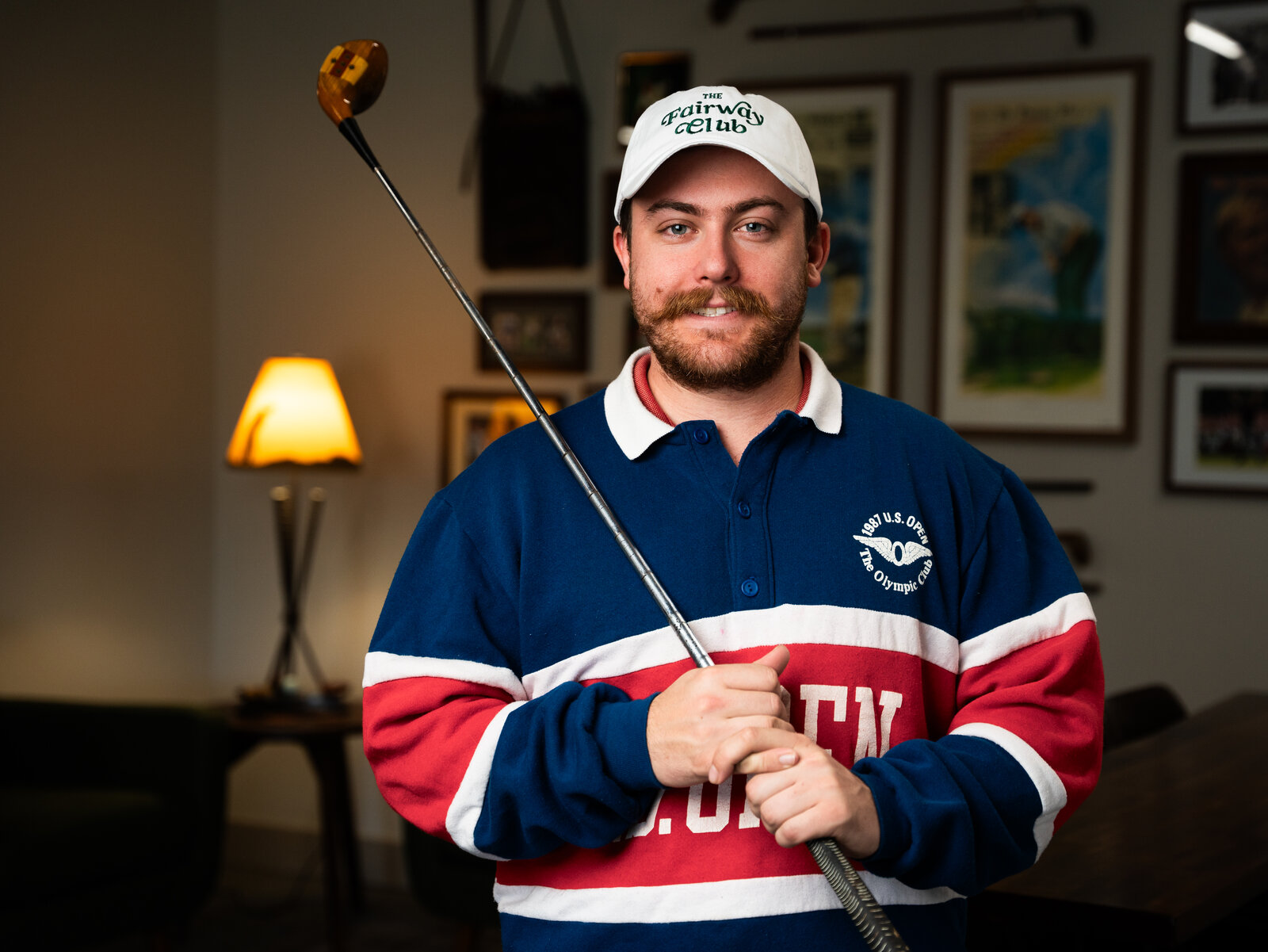
Logan Dahmer has been around a golf course since he was three years old. He played the AJGA. He made state his junior and senior years of high school. He had college offers on the table. By every measure on the page, he was on the track.
Then he walked away from the game for three years.
Today he runs Fairway Club, a four-bay simulator studio in Lee’s Summit, Missouri, about twenty minutes south of downtown Kansas City. He coaches the members, runs the leagues, sets the music, and answers his own phone. The vibe is closer to a clubhouse than a coaching academy — and that is on purpose.
“It is just a game, man. Everybody that comes here is not on the tour. We are just trying to get a little better at the hobby we love and have some community within it.”
The Burnout
Logan grew up grinding. Junior tours, high school golf, the full competitive calendar. By late high school the love was gone. The game had become a job, and his scores stopped reflecting the hours.
He saw friends one or two years ahead of him head off to play college golf and come back describing schedules that felt like ownership rather than opportunity. He decided he did not want that version of the sport in his life. Instead he enrolled at the University of Colorado, Colorado Springs to pursue Professional Golf Management — the PGA pathway.
He passed his Playing Ability Test. He cleared the early hurdles. And then, after a year, he quit. Not just the program. The game.
For close to three years he barely touched a club — a round or two a year with his dad, and that was it. He moved back home, took community college credits toward a business degree, and spent his days working at a specialty ice company that produced clear, hand-cut blocks for cocktail bars. He liked the work. He was not thinking about golf.
The Way Back
The return started as a favor. Logan was one credit short of his bachelor’s degree — he needed an internship. Around that same time, a local entrepreneur was opening a hybrid simulator-and-gym facility nearby and unexpectedly needed help getting it off the ground. The timing lined up. Logan signed on for what was supposed to be a short stint to finish his degree.
It turned into nearly four years.
He coached. He built relationships with members. He ran the floor. And somewhere in the middle of all of it, he realized he had fallen back in love with golf — just not the part he had walked away from.
“I love coaching. I love helping people. I love being in the background of people’s performance. I just do not love being in the spotlight of competition myself anymore.”
The competitive grind had drained him. Watching someone else break 90 for the first time did not.
Fairway Club
Logan opened Fairway Club roughly six months ago. The space is built around four indoor simulator bays, a coaching area, and a membership model that is, by his own description, the most affordable in town.
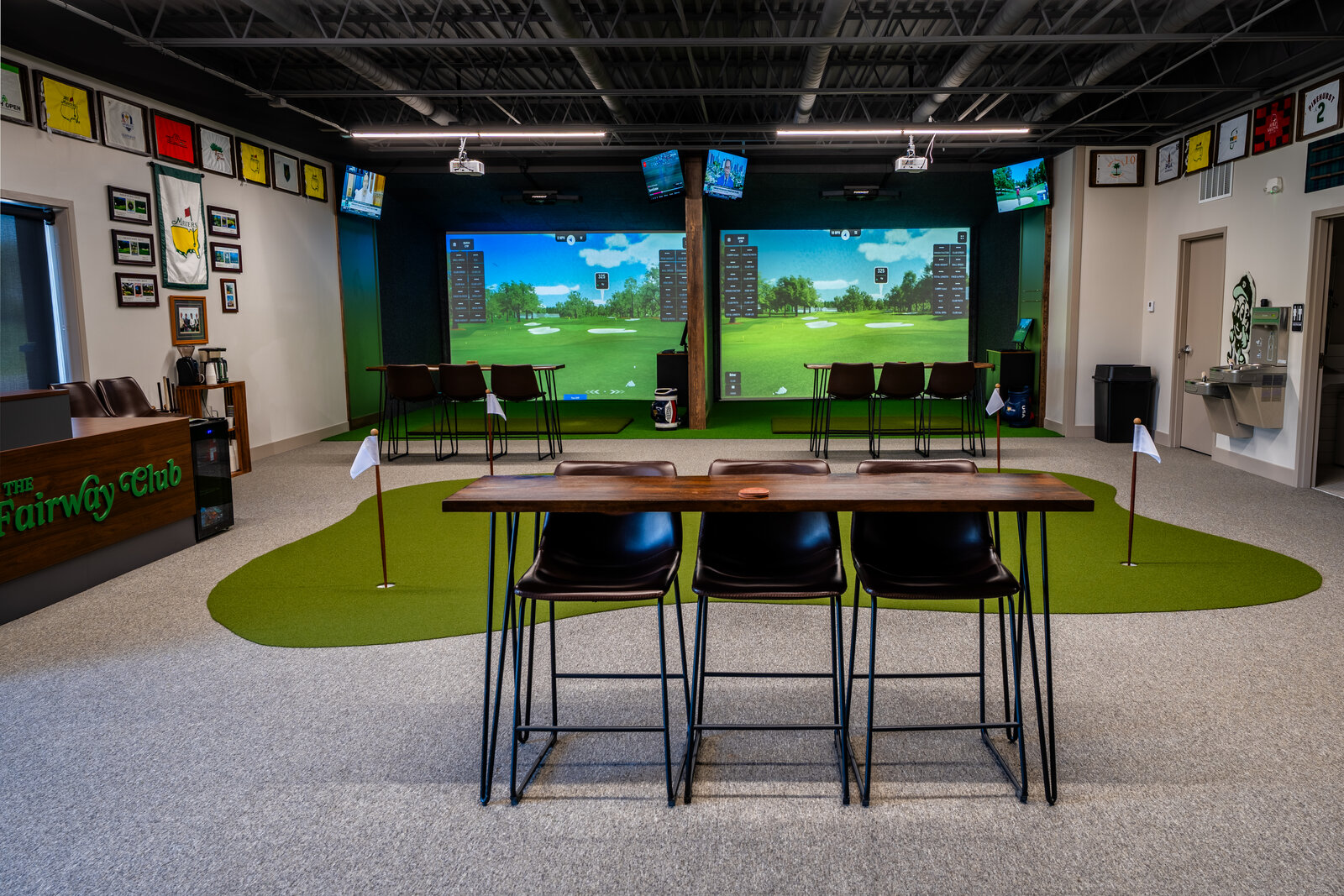
Members come in one to three times a week for an hour. Half the hour is usually working on something specific — a club path issue, a face angle, a swing fault that is bleeding shots. The other half is playing a virtual round with whoever happens to be there. Memberships are unlimited. There is no booking tax for showing up often.
Most of his members are between their thirties and fifties, sitting somewhere in the 15 to 25 handicap range. They are not chasing the tour. They want to break 90 for the first time, or sneak into the high 70s, or stop losing balls right. They want a place to do that without being made to feel like they need to take it more seriously than it deserves.
The aesthetic is intentionally vintage. Logan favors the era of Arnold Palmer and Jack Nicklaus — players who were serious over the ball and ordinary humans the rest of the time. The branding, the clothing, the feel of the room: all of it pushes back against a modern golf culture he thinks has become over-professionalized for the average person playing it.
“They took it serious when they were over the shot and during tournaments. But outside of that, a lot of them still had jobs. They were the man of the house. The game was the game — it was not their whole identity.”
Coaching the 90 Percent
Logan’s bread and butter is not the scratch golfer. It is the player who has shot 92 their whole adult life and wants to see an 89 on the card before the season ends. The slice-fixer. The first-time-into-the-70s candidate. The retiree who can still swing it but does not know why his ball flight changed.
He spends real time with each member, walking through the data the launch monitor is throwing back — club path, face angle, angle of attack — in language they can actually use. Every member has his personal cell number. There is no front desk between him and the people he coaches.
The bio on his website puts it plainly: “Whether it is helping someone break 90 for the first time or introducing a beginner to the game, my goal has always been to make golf more fun, approachable, and rewarding for every player who walks through the door.”
Fairway Club Joins the DRVN Partner Facility Network
Logan is not running fitness sessions inside Fairway Club. He may add a small training space in a few years when the second half of his building opens up — a rack, some dumbbells, a few bands — but he is realistic about it. Most of his members already pay for a gym somewhere. What they do not have is a structured program built specifically for the way golfers move.
That is the gap a DRVN Partner Facility is built to close. Logan tested the app himself for a couple of months before bringing Fairway Club on board, evaluating it alongside the other names in the space. What stood out was that it matched what he and his previous employer had spent years trying to build themselves — a programmed, golf-specific fitness experience members could actually do at the gym they already belonged to, without paying for a second one.
As a Partner Facility, Fairway Club now offers the full DRVN system to its members: standardized assessments, self-led golf-specific training, and Golf Fitness Handicap™ tracking. The Golf Fitness Handicap gives Logan a measurable body-weight baseline he can re-run with members every six weeks — real, comparable numbers that sit next to their launch-monitor data and their handicap index.
For the membership, DRVN becomes a perk that does not require another commute, another locker room, or another monthly bill. The older members who feel their mobility going can do something about it without committing to a second facility. The competitive members can layer real strength and speed work onto their practice without Logan having to invent the programming himself.
“I have a lot of older members who really struggle with flexibility. They go to the gym, BS a workout, try to get a little better. Having a real golf-specific option to point them at — that is the perk.”
Find Fairway Club
Fairway Club operates in Lee’s Summit, Missouri — serving golfers across the greater Kansas City metro including Blue Springs, Independence, Raytown, Belton, and the surrounding Jackson County communities. View the Fairway Club facility profile or find a DRVN Partner Facility near you in the DRVN Golf directory.
Related Articles

How Derek Rebuilt His Body Around Golf
Derek Lacelle has spent three decades reshaping what it means to compete — junior golfer, personal trainer, CrossFit competitor, military sports coordinator. Golf fitness is his latest form, and DRVN is how he sustains it.
Read
Mariah Swigart Is Making Golf Move Different
How Phoenix coach and creator Mariah Swigart built a career where fitness ties everything together — from Putt and Pilates clinics to a 56,000-strong following — and why she added the DRVN Certified Pro credential to back it up.
Read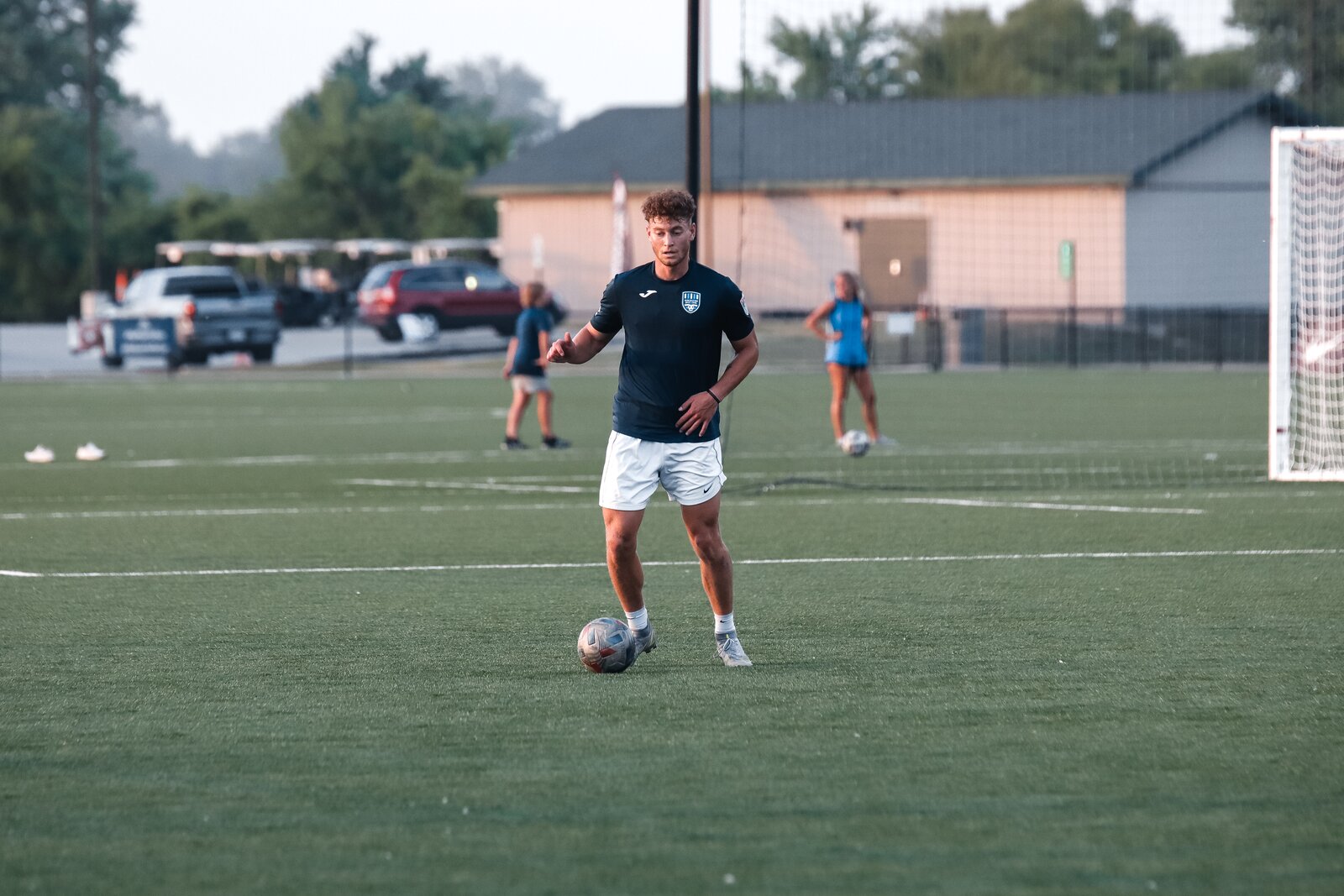
Athletes Need a Second Sport. Noah Henry Picked Golf.
The athletes who hang up the cleats at twenty-two have to figure out what their bodies are for next. Most do not. Noah Henry's path — college soccer, a semi-pro try, a job with the Cardinals, a creative practice for performance brands, and now golf — is one answer.
Read