
The Practice Worth the Drive
How Eric Stevens built one of the most thoughtful junior golf programs in the country at Vitality Golf in Watertown, South Dakota — and why DRVN certification gave him the tools to reach adults next.

Walk into Vitality Golf in Watertown, South Dakota, and the first thing you notice is the space. Ten thousand square feet of open turf. Three TrackMan bays. A weight room. A Proteus motion machine for rotational athletes. Batting cages along one wall. Hand-painted signage from a local artist on another.
The second thing you notice is what the place is built around. There is a task board near the practice tee where each session’s work is laid out in writing. Students carry pen-and-paper notebooks they are required to actually use. Reflection prompts close every group practice. The whole environment is designed to put the student in charge of the learning rather than the coach in charge of the corrections — a deliberate choice, Eric Stevens will tell you, and one he made years before he opened the doors.
Vitality Golf is not, on paper, where you would expect to find one of the more sophisticated junior development programs in American golf. Watertown sits in northeast South Dakota, two hours south of Fargo and ninety minutes north of Sioux Falls. The next nearest population center of any size is Brookings, with about twenty thousand people. For a hundred miles in every direction, there is no comparable golf performance facility — which is exactly why the kids who are serious about the game keep showing up at Eric’s door.
The Long Way In
Eric grew up in Clark, a town of about a thousand people thirty minutes from Watertown. He came up around the game and went into it directly out of college, working as an assistant pro because he had no idea what else to do. He is candid about that period. It was fine. It was whatever. It paid the bills.
Then his kids started growing up, and Eric left golf entirely. He spent years in education. Math teacher. School counselor. Working with adolescents on how they think, how they set goals, how they grow. He liked it, and it changed how he sees coaching.
A pro at a private club near Watertown left abruptly one spring, and the club asked Eric if he could help out part-time. He took the job, kept counseling, and started running into a problem he could not stop thinking about. The juniors in the area — and there were some genuinely talented ones — had nowhere to practice in the winter. They were driving two hours each way, once a week, just to swing a club indoors.
One of the club members owned some buildings in town. He is the kind of person Eric describes, with affection, as a man of action. He turned to Eric with a question. Would you be interested?
The first iteration of Vitality Golf opened in the fall of 2022. Three bays. A small putting green. A tiny weight room. Some of the most skilled junior golfers in the region followed Eric there, and the place worked. Three years later, the program had outgrown its first home, and Eric and his partner moved into the building they are in now.
“Most of my favorite experiences here have involved very little to do with golf itself.”
Why Mechanics Are Not the Answer
Eric does not consider himself a mechanics coach. He is quick to say that mechanics matter. He is also quick to say that they are almost never the actual cause of what is going wrong with a golfer.
“Mechanics are interesting descriptions of things,” he says. “But rarely are they the cause of anything.”
What he does instead borrows directly from the educational and human-development worlds he spent years inside. The model is called constraint-led learning, sometimes intention-led practice. Rather than telling a student where to put an elbow, the coach designs a task — a target, a shape, a challenge — that the student has to figure out how to complete. The body organizes itself around the goal. The learning sticks because the student owns it.
Most weeks, sixteen group practice sessions run through the facility. Students sign up for the times that work for them, sometimes with the same group, sometimes with new faces. Each session is built around a task board. Eric writes the practice up, and the students think their way through it. There is a putting and chipping section. A finesse-game section. A full-swing section. There are reflection prompts at the end of every session, and the students carry pen-and-paper notebooks they are required to actually write in.
Phones do not count. He insists on this.
“They do not want to write anymore,” Eric says. “But the kids who do it start to chase that feeling a little bit. It puts them in charge of their own learning.”
The Goal Is to Be Free from Regret
Every student goes through a goal-setting process when they start at Vitality. It almost always plays out the same way. Eric asks for a main golf goal and a main life goal. The student picks something. Eric tells them, kindly, that it is too low. They pick something more ambitious. He breaks that down into performance metrics, and from there into the actual processes — the daily things that would have to be true for the goal to be possible.
On the junior side, the framework lands in one place. By the time a student is done with high school, or done with college, Eric wants them free from regret. Whether or not they get the outcome they were chasing, they will look back and know they did the work. That is the entire point.
“If you have done all the things it would take to get there, whether or not you get it does not make any difference. You did the work. That is how life goes.”
The mental work is not separated from the physical work. Eric is firm about this. The two are not independent variables, and treating them like they are is one of the reasons coaching often fails. Every week, he asks his students to do something that sucks a little bit. Usually it is running. Usually it is the journaling. Both are unpopular. Both, in his experience, are where the growth actually happens.
Who Trains There
About ninety-five percent of Eric’s clientele is between eight and twenty-two years old. Some come from Watertown. Some drive in from the small towns scattered across the northeast corner of the state — places with two thousand people and no other resources. The radius is wide because it has to be. There is nothing like it.
There are some adult members. They get access to the facility and the freedom to ask Eric questions when he is around, but the structured programming is built around the juniors. Eric is honest about why. The adult population in a town this size is not, by and large, the population that signs up for swing instruction or weekly small-group practice. The economics and the demand simply have not been there.
Where he sees the next opening is golf fitness. The adults who do come through the door are increasingly aware that they are not physically prepared to play the game the way they would like to. They are not signing up for swing lessons. They might sign up for an assessment. They might sign up for a plan.
“I think we could attract some adults to that side of it,” Eric says. “I think they would rather do that than a bunch of swing instruction. Which is great. Because I would rather do that too.”
Why DRVN
Eric joined the DRVN ecosystem because the methodology lined up with where he was already trying to take his practice. Mechanics are not the answer. Performance is. The Golf Fitness Handicap™ gives him a way to put a number on the thing he has been telling adults for years — that the body has to be ready before the swing can be — and the DRVN Certified Pro™ designation gives him a credential that signals exactly the kind of work he wants to do more of.
It also gives him a way to reach people he otherwise would not. DRVN’s national footprint of app users means there is a flow of golfers, in his region, who already care about performance. The next phase of the program is matching those users with the credentialed coach closest to them. For the only performance facility in a hundred-mile radius, that matters.
The Point of All of It
Eric is candid that the world does not need more good golfers. He says it out loud, often, to his students’ parents. Golf is a great game. It is also a vehicle. The point of the work, in his telling, is to use it as a pathway to becoming a better human being. Mentally fit. Physically fit. Free from the regret of not having tried.
There are coaches with bigger facilities and bigger names. There are coaches in cities where the demand finds them. Eric Stevens is not one of those coaches. He is in a small town in northeast South Dakota, building a program one junior at a time, asking each of them to do the boring thing, write the hard thing down, and run when they would rather not.
The kids who stay are the ones who start to like it.
Train with Eric
Vitality Golf | Watertown, South Dakota
Eric Stevens is a DRVN Certified Pro™ serving golfers across northeast South Dakota, including Watertown, Brookings, Clark, and the surrounding region. Junior development programs, adult assessments, and golf fitness coaching available year-round.
Find Eric on the DRVN directory.
Related Articles

How Derek Rebuilt His Body Around Golf
Derek Lacelle has spent three decades reshaping what it means to compete — junior golfer, personal trainer, CrossFit competitor, military sports coordinator. Golf fitness is his latest form, and DRVN is how he sustains it.
Read
Mariah Swigart Is Making Golf Move Different
How Phoenix coach and creator Mariah Swigart built a career where fitness ties everything together — from Putt and Pilates clinics to a 56,000-strong following — and why she added the DRVN Certified Pro credential to back it up.
Read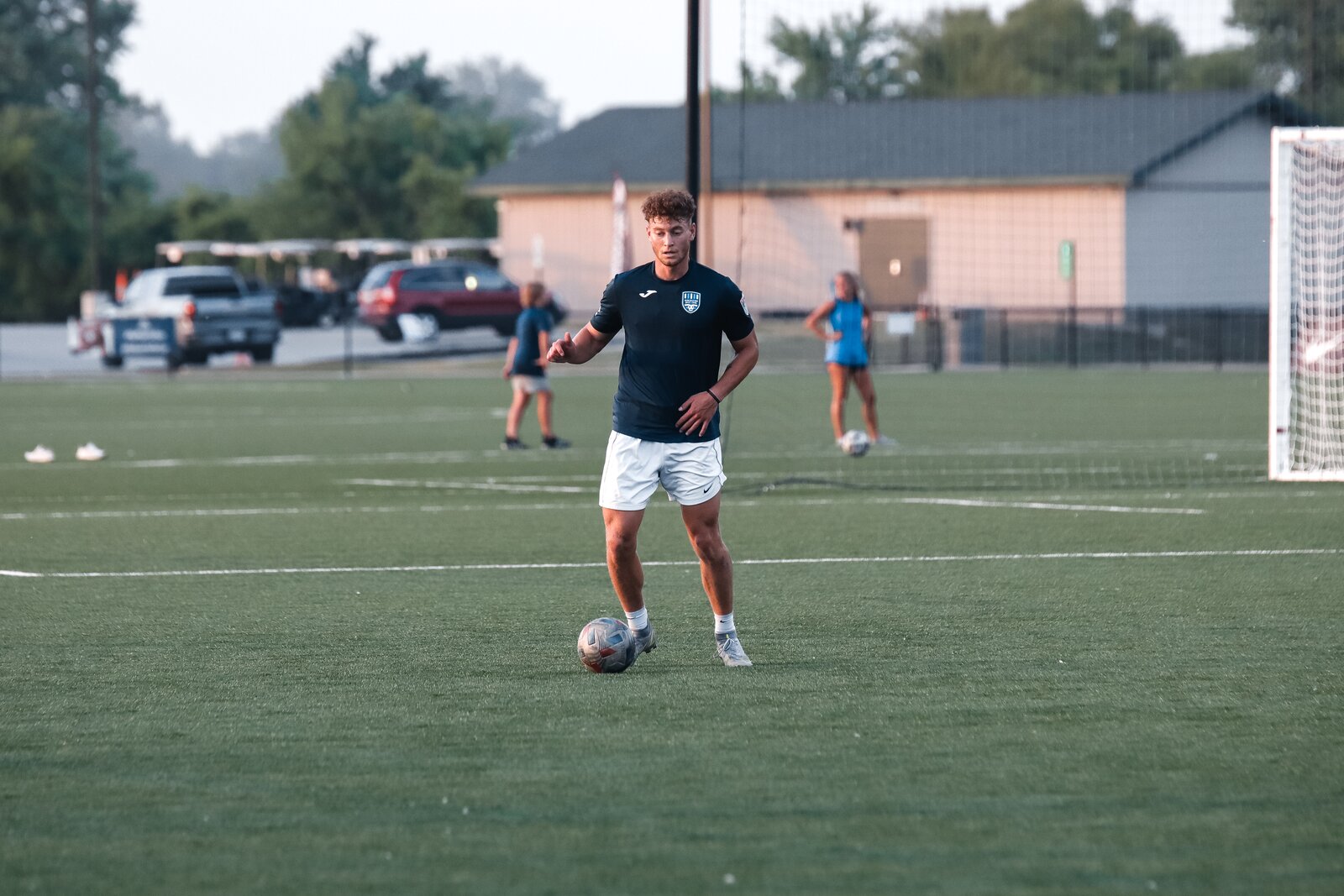
Athletes Need a Second Sport. Noah Henry Picked Golf.
The athletes who hang up the cleats at twenty-two have to figure out what their bodies are for next. Most do not. Noah Henry's path — college soccer, a semi-pro try, a job with the Cardinals, a creative practice for performance brands, and now golf — is one answer.
Read