
Golf Swing Exercises: Build the Movement Your Swing Needs
The best golf swing exercises organized by what they fix — mobility, rotation, power, and speed. A phase-by-phase guide to training the body behind the swing.
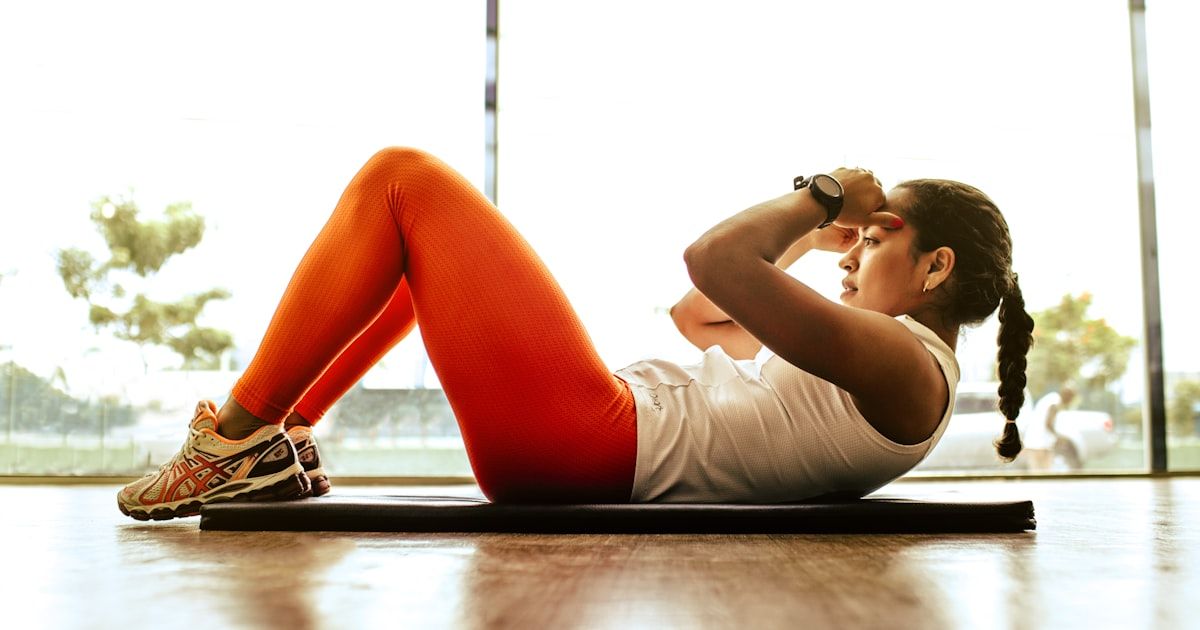
Search "golf swing exercises" and you'll drown in random movement lists — a band pull here, a plank there, a medicine ball throw with no explanation of why. The problem isn't a shortage of exercises. It's that most golfers do them with no idea which part of the swing each one is supposed to improve. Exercises without a target are just activity.
The golf swing is a sequenced, full-body movement: a stable setup, a coiled backswing, an explosive downswing, and a balanced finish. Each phase makes specific physical demands — mobility here, stability there, power somewhere else. The most effective golf swing exercises are the ones chosen to address the phase where your body is actually limiting you. This guide organizes the best exercises by what they fix, so you can train with intent instead of collecting random reps.
Before the Exercises: Train the Limitation, Not the Symptom
A slice, a loss of distance, an inconsistent strike — these are symptoms. Underneath each one is usually a physical limitation: a tight thoracic spine that can't rotate, weak glutes that can't drive the downswing, a core that can't transfer force. Picking golf swing exercises starts with knowing your limiting factor, which is exactly what a fundamentals-and-fitness assessment reveals. Train the cause, and the symptom resolves on its own.
The categories below map to the swing in sequence. You don't need all of them — you need the ones that match your gaps.
1. Mobility Exercises: The Range of Motion to Get Into Position
If your body can't reach the positions the swing requires, every other quality is wasted. Mobility comes first. The priorities for golfers are thoracic (mid-back) rotation, hip internal and external rotation, and shoulder range.
- Open books / thoracic rotations — restore the mid-back rotation that drives a full backswing turn.
- 90/90 hip switches — build the hip rotation needed to load the trail hip and clear the lead hip.
- World's greatest stretch — a full-body movement hitting hips, T-spine, and hamstrings in one pattern.
Mobility work pays off fastest when it's daily and brief. A complete sequence lives in our guide to golf stretches and flexibility, and the setup positions they unlock are covered in golf posture.
2. Stability Exercises: The Control to Stay in Position Under Load
Mobility without stability is just looseness. Once you can reach a position, you need the control to hold it while force moves through the body. For golfers, that means anti-rotation core strength and single-leg stability.
- Pallof press — the foundational anti-rotation exercise; teaches the core to resist the twist so energy doesn't leak.
- Single-leg balance and reaches — build the trail- and lead-leg stability the swing loads independently.
- Bird dogs and dead bugs — train the trunk to stay neutral while the limbs move, the exact demand of the swing.
3. Strength Exercises: The Engine Behind the Downswing
Power in the golf swing starts from the ground. The glutes, hamstrings, and posterior chain are the primary force producers, and they need real strength to drive the downswing and resist deceleration through impact.
- Hip hinges and deadlift variations — develop the posterior chain that powers hip drive.
- Split squats and lunges — build single-leg strength for the asymmetrical demands of the swing.
- Rows and presses — balanced upper-body strength to support the arms and shoulders through the swing and finish.
For a full progression, see our guide to strength training for golfers. Equipment matters less than consistency — there are effective routines with kettlebells, resistance bands, and dumbbells, each mapped to the phases of the swing.
4. Power and Speed Exercises: Turning Strength Into Clubhead Speed
Strength is the capacity to produce force; power is the ability to produce it fast. The golf swing happens in a fraction of a second, so the final layer trains the body to express its strength explosively and in the rotational pattern the swing uses.
- Medicine ball rotational throws — the single best transfer exercise for rotational power; trains the kinematic sequence directly.
- Band-resisted rotations and chops — train fast rotation against accommodating resistance.
- Jump and landing variations — develop ground-reaction force and the ability to absorb it on balance.
Speed work belongs at the end of the chain, once mobility, stability, and strength are in place. Rushing to speed training on a restricted, unstable body is how golfers reinforce compensations and get hurt.
How to Put Golf Swing Exercises Into a Program
Random exercises produce random results. A simple, effective structure for a golf-specific session:
- Prep (mobility): 5–10 minutes restoring T-spine and hip range.
- Activate (stability): anti-rotation and single-leg control to wake up the right patterns.
- Build (strength): 2–4 main lifts focused on the posterior chain and single-leg strength.
- Express (power): rotational throws or band work to convert strength into speed.
Two to three sessions a week, progressed over time, is enough to change how your body moves — and how it holds up across 18 holes. The exercises that matter aren't the flashiest ones; they're the ones that target your specific limitation and get progressively harder as you adapt.
Train the Swing You're Actually Trying to Build
The best golf swing exercises aren't a fixed list — they're the right movements for your body, sequenced in the right order, and progressed over time. Mobility to reach the positions, stability to hold them, strength to power the swing, and speed to deliver it. Do them with that intent and the swing improvements follow; do them randomly and you're just exercising.
DRVN takes the guesswork out. The DRVN app assesses where your body is limiting your swing and builds a program that targets it — the exact mobility, stability, strength, and power work you need, progressed automatically as you improve. Prefer a coach? A DRVN Certified Professional can build the same plan around you in person. Stop collecting exercises. Start training the swing.
Related Articles
Golf Exercises for Seniors: A Joint-Friendly Routine (With Printable PDF)
A joint-friendly routine of golf exercises and stretches for seniors — eight moves, 15 minutes, no gym required. Includes a free printable PDF to track your reps.
Read
The Off Season Is Where Your Best Golf Is Built
The summer reveals what your body can do. The off season is when you change what that is. Inside the five-phase DRVN progression — Strength, Power, Speed, Biomechanics, Skill Transfer — and what it delivers for three very different golfers.
Read
Golf Posture: The Setup Fundamentals That Unlock Rotation
Correct golf posture isn't a checklist position — it's a product of hip hinge, thoracic extension, and core control. Here's how to build a setup that lasts 18 holes.
Read